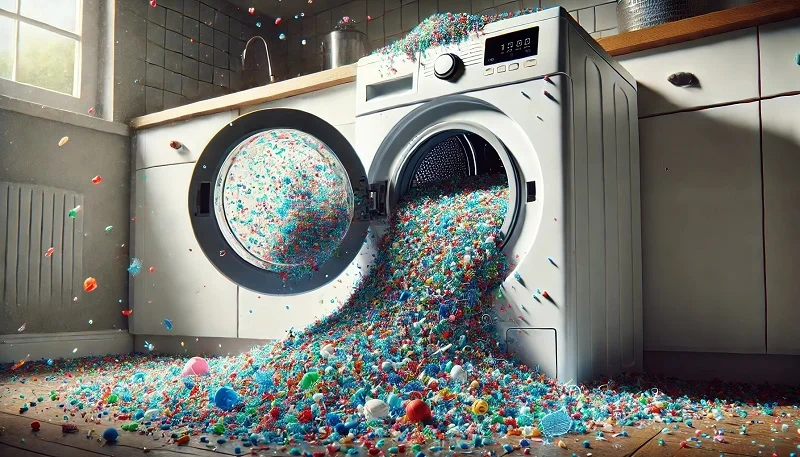
Most people don’t realise that every time we do the laundry, tiny invisible particles are escaping into the environment. They’re called microplastics, and they come directly from our clothes. In London, where thousands of washing machines are running at any given moment, the problem is bigger than you might think.
What Are Microplastics?
Microplastics are tiny plastic fibres less than 5mm long, shed from synthetic fabrics like polyester, nylon, and acrylic. Every wash cycle releases hundreds of thousands of these fibres into the wastewater system.
The issue? Water treatment plants can’t catch them all. They end up in rivers, oceans, and eventually back in our food chain.
How Laundry Contributes to the Problem
A single load of polyester clothes can release up to 700,000 microplastic fibres in one wash. Multiply that across millions of households in London, and the numbers get staggering.
- Fleece jackets, gym gear, and fast fashion are the worst offenders.
- Hot water and long cycles increase fibre shedding.
- Dryers also release microplastics into the air as lint and dust.
The Impact on Health & Environment
- Marine life mistake microplastics for food, which harms ecosystems.
- Human health risks are still being studied, but microplastics have already been found in drinking water, seafood, and even the air we breathe.
- The fashion industry’s reliance on synthetics means this issue isn’t going away anytime soon.
Can Professional Laundry Help?
Yes , in several ways:
- Commercial-grade filtration systems capture more fibres than the average home washing machine.
- Eco-conscious laundry services often use lower temperatures and gentler cycles that reduce shedding.
- Bulk washing is more water- and energy-efficient, meaning fewer fibres are released overall compared to many small home washes.
By outsourcing your laundry, you can reduce your personal contribution to the microplastic crisis.
What You Can Do at Home
Even if you still wash some clothes at home, here are simple steps to help:
- Use a microfibre-catching laundry bag (like Guppyfriend).
- Wash at lower temperatures and shorter cycles.
- Choose natural fabrics like cotton, linen, or wool when possible.
- Line dry when you can to reduce fibre shedding in dryers.
Final Thoughts
The dirty truth is this: every load of laundry has an environmental impact. But with smarter choices like using professional services and adopting small changes at home Londoners can help reduce the flow of microplastics into our rivers and oceans.
At Fresh 4u Laundry, we’re proud to support eco-friendly practices while giving you back time, convenience, and peace of mind.